Every few years, someone announces they have found Noah’s Ark. Every few years, the announcement fades. This time, the people making the claim brought drills.
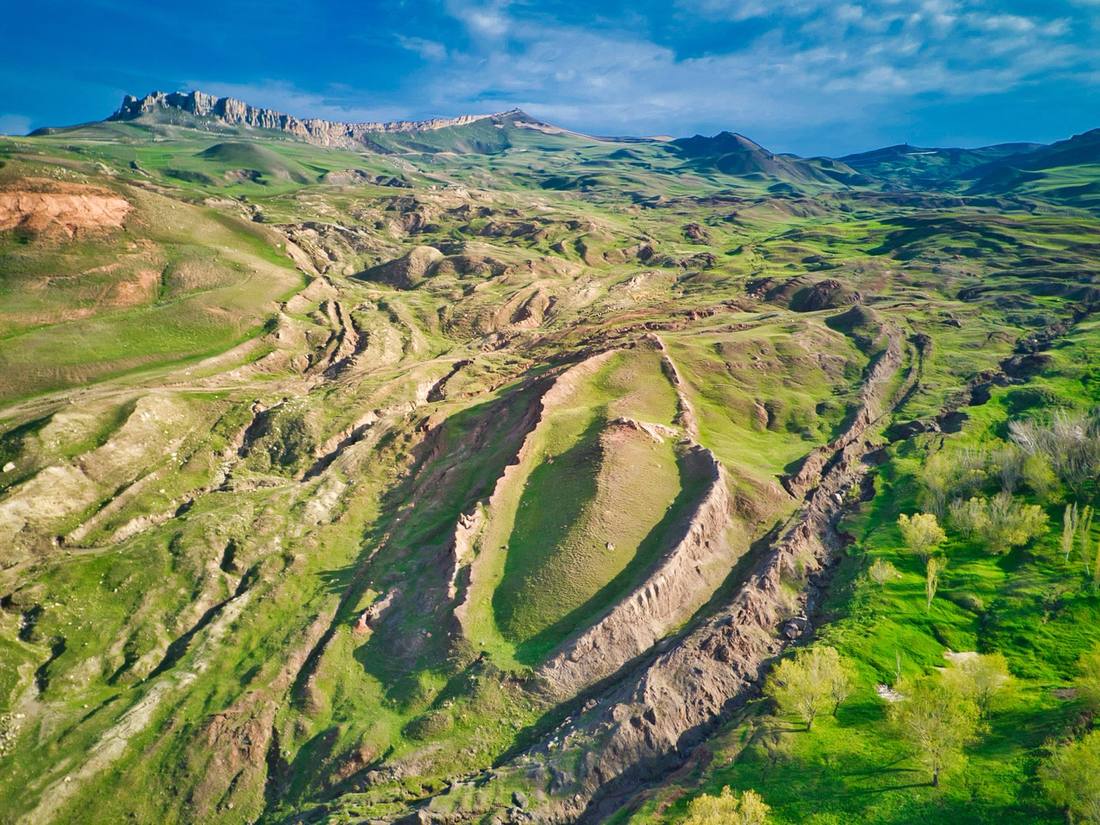
The hill that looks like a boat
In eastern Turkey, not far from the Iranian border, a ridge of earth rises from a farming valley. Seen from above, it is long, tapered, and symmetrical, with something like a bow at one end and a stern at the other. It measures roughly 500 feet from end to end.
This summer, a team drilled into it and pulled out hundreds of soil cores. Their headline finding: about 40 percent more carbon inside the formation than in the ground around it.
Carbon means organic material. Organic material could mean wood. And wood, in this particular place, makes people think of one very famous boat.
So is the Ark buried under that hill? The short answer is no. The long answer is far more interesting.
What the Bible actually says
The Book of Genesis gives the outline. Humanity turns violent and corrupt, God sends a flood, and one man builds a vessel to carry his family and pairs of animals through it. Rain falls for forty days, the waters hold for 150, and then the Ark comes to rest “on the mountains of Ararat.”
Notice the plural. Mountains. That describes a region, not a single summit, and the ancient name Urartu referred to a kingdom spread across the highlands of eastern Anatolia and the southern Caucasus. For roughly 1,700 years, people have read that phrase as if it were a street address.
The text also gives dimensions: 300 cubits long, 50 wide, and 30 high. Depending on which cubit you use, that works out to somewhere around 450 feet by 75 feet by 45 feet. Keep those numbers in mind, because they become important once enthusiasts start measuring hills.
Two thousand years of searching
The legends started early. A fourth-century bishop, Jacob of Nisibis, supposedly climbed toward the Ark until an angel stopped him and handed over a splinter of wood as a consolation prize. Marco Polo later reported an Ark on an Armenian peak, locked under snow. Another medieval tradition placed it near the city of Ani.
Three stories. Three different places. Zero verified evidence.
Then people began actually climbing. Friedrich Parrot, a Baltic German scientist, made the first recorded ascent of Mount Ararat in 1829. In 1876, the British historian James Bryce found a piece of worked timber above 13,000 feet and carried it home, though nobody could say where it came from or how it got there.
In the mid-twentieth century, the French explorer Fernand Navarra claimed he had pulled wood from beneath the ice. When it was radiocarbon dated, the results landed somewhere between the third and eighth centuries AD. Not the Bronze Age. Not even close.
Mount Ararat, which rises nearly 17,000 feet, kept offering hope and refusing to offer proof. So attention drifted about twenty miles south, to a formation that looked far more like a ship.
The Durupinar formation
The site is named after Captain Ilhan Durupinar, a Turkish army officer who spotted the odd shape in aerial photographs taken during a mapping survey in 1959. Its fame grew in the following decades, boosted by amateur explorers who measured it, mapped it, and argued that it matched the biblical dimensions of the Ark.
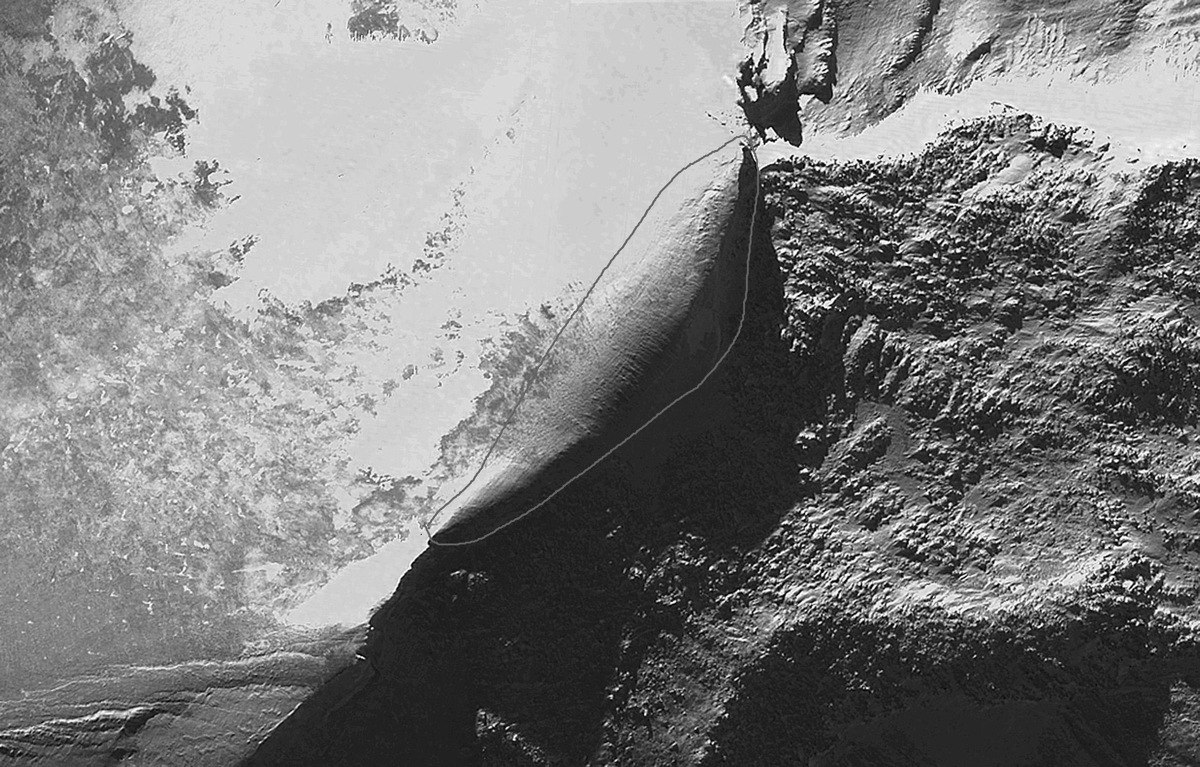
From orbit, the resemblance is hard to unsee. Geologists offer a less romantic reading. Erosion and shifting sediment produce landforms that resemble things all the time, which is the same reason we see faces in clouds. A 1996 study in the Journal of Geoscience Education concluded the formation is a natural feature, shaped by the movement of the ground itself.
But a satellite image can’t settle anything. Only samples can. In July 2026, a team went to collect some.
The drill
The Noah’s Ark Research Project brought about twenty researchers from five countries. They drilled and collected hundreds of cores from documented depths across the formation.
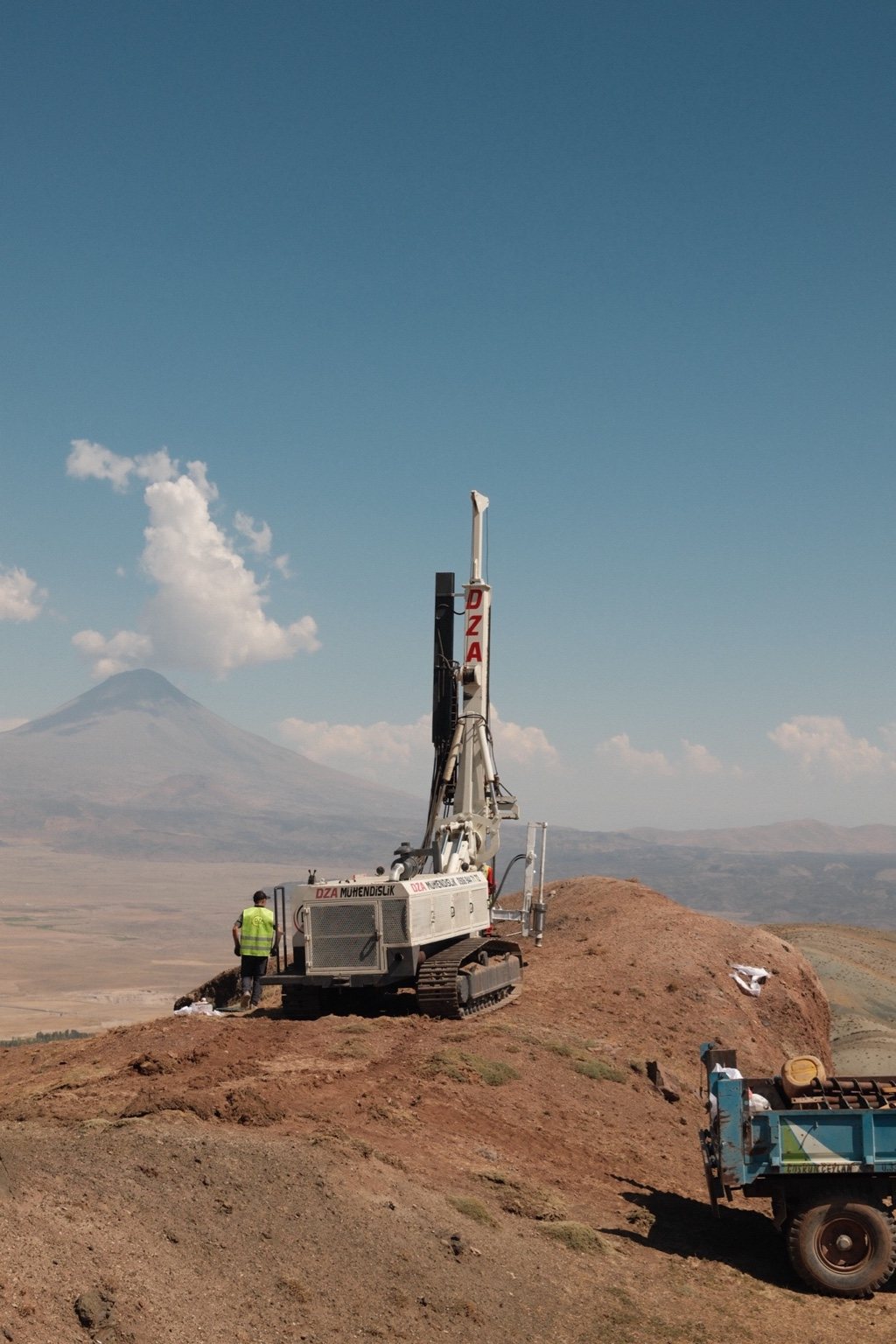
According to the project’s vice president, Andrew Jones, the cores were mostly soil. Not a solid block of limestone, and not a continuous slab of anything.
The team read that as a reason to dig deeper. But soil is the most ordinary material on Earth. It fills natural cracks and hollows, and it is what bedrock becomes after enough weathering. Finding it does not hint at a buried hull. What matters is the pattern: how the material is layered, and how it differs from the ground around it.
Which brings us to that number.
The 40 percent problem
The team reports about 40 percent more carbon inside the formation than outside, and suggests this could mean more organic material, possibly decayed wood.
It is a fair thing to investigate. It is also a weak thing to build a conclusion on.
Carbon shows up in roots, leaves, and rotting plants. Drainage, vegetation, and the way sediment piles up can all push carbon levels around. A hollow that traps water and plant debris can look carbon-rich without a single plank in it. Even if a sample did contain wood, it could come from trees that grew on the hillside, washed in from nearby slopes, or got buried in a landslide.
If the team recovers real wood fragments, radiocarbon dating can estimate their age, and a microscope can look for tool marks or signs of shaping. Until then, the carbon is a lead. It is not a finding.
The team also reported finding pottery nearby, but not inside the formation. It may point to ancient settlements in the area, which is a genuine archaeological story. It just isn’t an Ark story.
The proof problem
Now suppose the best case happens. Researchers find timber under that hill, and the date comes back several thousand years old. Is that the Ark?
No. Radiocarbon dating tells you when a tree died. It says nothing about who cut it or what they built. Old wood could be a house, a barn, another boat, or a natural log jam.
You would first have to show that it is one coherent, human-made structure. Then you would have to tie that structure to a specific biblical figure. The archaeologist Jodi Magness has pointed at the core difficulty: even a genuine ancient vessel would need independent evidence linking it to Noah, and there is no independently established date for Noah to check against.
Finding the boat is the easy half. Naming it is the impossible half.
The flood behind the flood
Which may be why the older story is more revealing than any vessel.
Geology does not support a single recent flood covering every mountain on Earth. It does document plenty of regional catastrophes: river surges, glacial lake outbursts, flooded coastlines. To the people living through one, it would have felt like the end of the world, because it was the end of theirs.
The Bible was also not first. In 1872, the British Museum scholar George Smith stunned an audience in London by announcing that he had read a flood story on a cuneiform tablet from the library of Nineveh, one that closely resembled Genesis. That tablet belongs to the Epic of Gilgamesh, in which a man named Utnapishtim is warned of a flood, builds a boat, saves his family and animals, and releases birds to test whether the waters have fallen. Two other Mesopotamian texts, the Atrahasis Epic and the Sumerian tale of Ziusudra, tell variations of the same story.
Flood-survivor tales were circulating across the ancient Near East long before Genesis took its final form. Scholars study how the biblical writers reworked familiar material to say something new about wrongdoing, judgment, and a fresh start.
The disaster behind it all is still debated. One candidate is the Tigris and Euphrates, rivers that regularly drowned the plains of Mesopotamia. In the 1920s, the archaeologist Leonard Woolley found a thick layer of silt at Ur and linked it to the flood, though later work showed it was a local event rather than a region-wide one. Another candidate is the Black Sea. In the 1990s, William Ryan and Walter Pitman proposed that Mediterranean water burst through the Bosporus into a lower freshwater basin, swamping its shores. Researchers still argue over when it happened, how large it was, and how fast.
Neither idea has been established as the source. Memory bends over centuries, and the original event may be unrecoverable.
So, has the Ark been found?
Here is where things stand. The formation looks like a boat. The cores contain soil. The carbon is elevated. The pottery sits outside. None of it shows a wooden vessel under that hill, and the Ark has not been confirmed.
But something has changed. A legend that lived on photographs and faith is now being tested with drills and lab work. That is progress, even if the answer disappoints.
A striking shape isn’t proof. Neither is a carbon reading. And an ancient plank wouldn’t come with a name tag.
Has Noah’s Ark been found? Not yet. And the hill isn’t done talking.