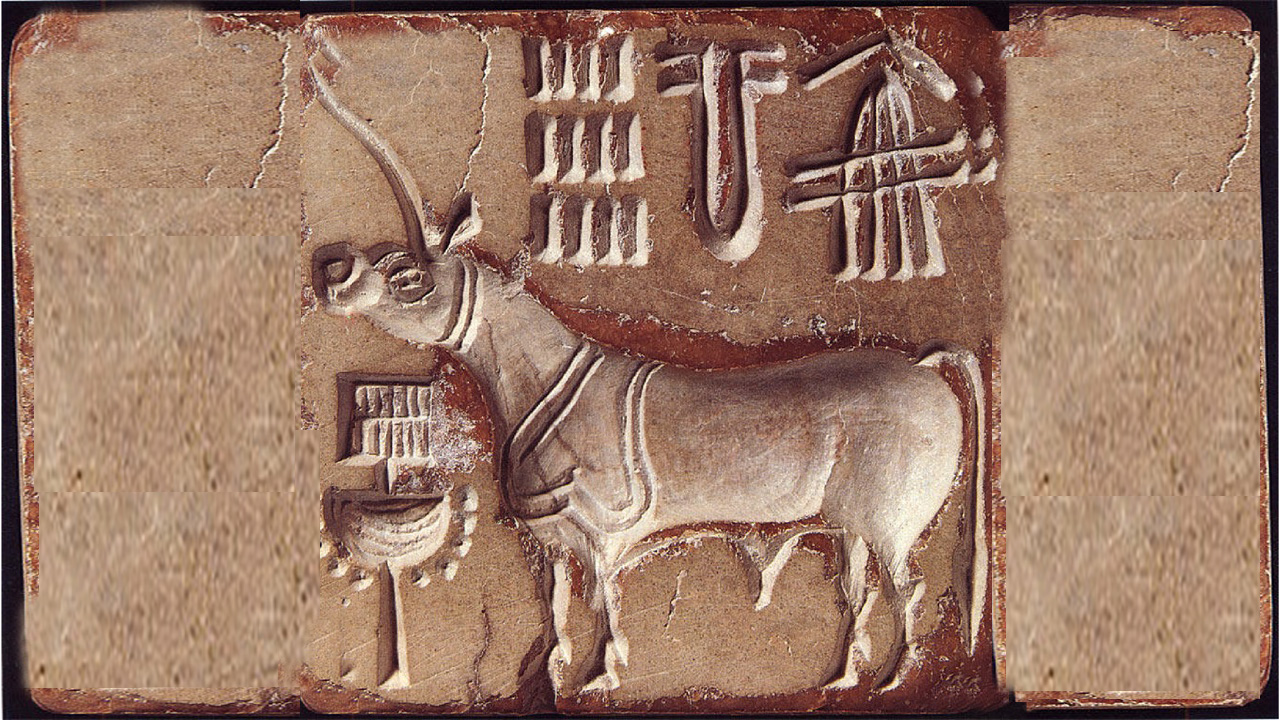
Around 4,000 years ago, artisans in the Indus Valley carved the same creature into small stone seals, over and over. It has the body of a bull, a single curving horn, and a strange ritual object in front of it. Modern scholars call it the “unicorn,” a label that may not fit. Why did one animal dominate the art of an entire urban civilization?
A civilization in miniature
The most common Harappan seals were square, carved from steatite, with a boss on the back, an animal motif below, and an inscription above. They turn up across the region, and more than 4,000 inscribed objects have been found since the 1870s. Some have been found as far away as Mesopotamia.
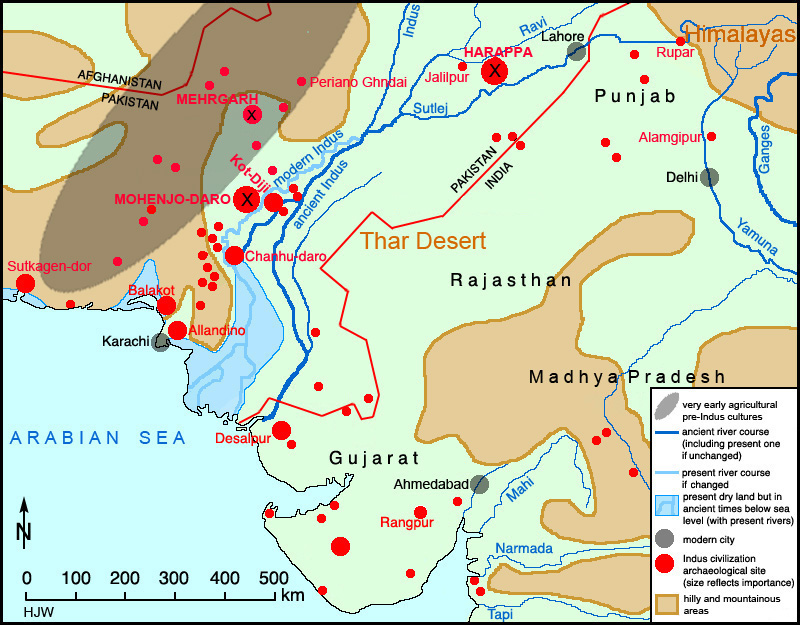
The unicorn dominates the finds. Excavations led by Ernest Mackay at Mohenjo-daro between 1927 and 1931 alone yielded 388 unicorn seals. According to archaeologist Mark Kenoyer, more than 60 percent of seals at Mohenjo-daro carry the motif, and about 46 percent at Harappa.
Unicorn or aurochs?
Is the animal mythical or real? In their corpus of Indus seals, Asko Parpola and S.G.M. Shah argue that it had a mythological significance but is likely a real animal, probably the aurochs, a wild ox that actually had two horns. Another theory holds that the animal truly has two horns, reduced to one by stylization.
Clan, cult, or charm?
Kenoyer reads the motif as social identity. He suggests the unicorn was “a very important symbol for their elites and traders”, possibly marking a clan or trading community present in every major settlement. In his view, the less common bull, elephant, rhinoceros, and tiger seals may have represented the most powerful communities.
Other readings exist. A Victoria and Albert Museum catalog entry suggests the unicorn stands before a vessel that may have held the intoxicating soma drink of Vedic rituals, though that remains speculative. Some scholars have also proposed that the seals may have served as amulets or charms.
A script no one can read
The inscriptions above the animals should settle it, but they don’t. The script, used from roughly 2600 to 1900 BCE, contains about 400 to 600 signs, depending on how variants are counted. The average inscription has about five signs, and the longest is only 26. There is also no bilingual text comparable to the Rosetta Stone.
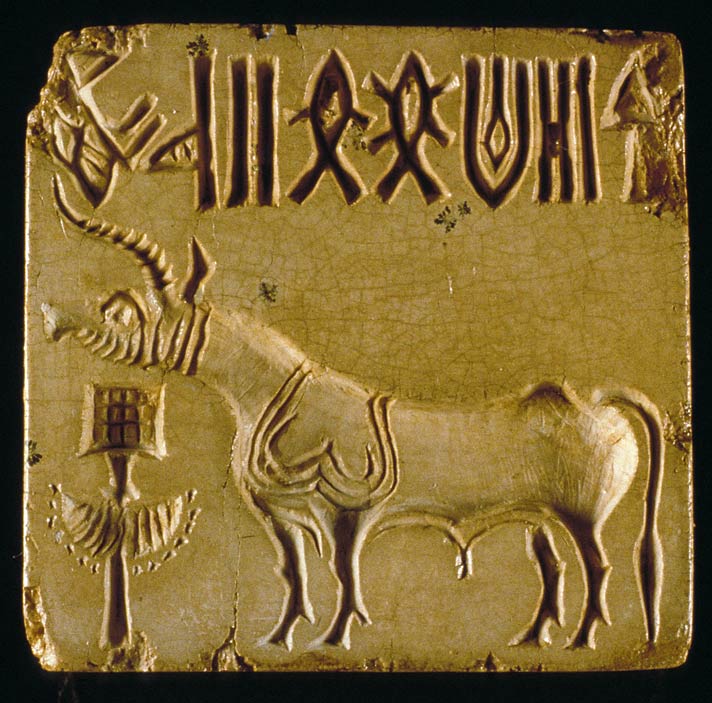
Scholars disagree on whether it records language at all. As researcher Bonta told Live Science, the inscriptions are “brief and highly repetitive”, which makes any decipherment hard to reproduce. Computer scientists are now applying AI and statistical analysis, but even a successful decoding might struggle to win wide acceptance.
An open question
Even the unicorn’s dominance depends on how it’s counted. One study found it on roughly 70 percent of boss-backed square seals at Mohenjo-daro and Harappa, and on about 77 percent in one Harappa sample. These figures use different denominators than Kenoyer’s. The pattern holds either way, but the exact share is a matter of method.
Whether it was a clan emblem, a sacred beast, or a trader’s trademark, the animal’s meaning is locked in a script no one can read. Could a longer inscription, or one found in a sealed trading house, finally explain it?